|
Note individuelle
: |
follower of Shabetthai Zebi, Salomon renowned for
defence of Cardozo and Nehemiah Hayyun acc of heresy
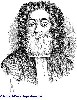
rabbi and kabbalist. Ayllon was born in Salonika, and received his rabbinical training there. As a young man he joined the followers of Shabbetai Zevi and was in personal contact with Nathan of Gaza. The accusation made by Ayllon's opponents that he was among those followers of Shabbetai who had adopted Islam (Doenmeh) and the insinuation that his first wife had not been properly divorced from her first husband, have never been proved. He seems, in fact, to have belonged to those moderate Shabbateans who remained faithful to rabbinical tradition. After 1680 he settled in Safed in Erez Israel, spending several years there, and later went to Europe as an emissary of the Safed community. In 1688 he arrived in Leghorn and established close ties with the Italian followers of Shabbetai Zevi. In 1689 he went to London and was appointed haham of the Jewish community, although not without opposition, which was further aggravated when his earlier connections with Shabbetai Zevi became known.
In 1700 he was appointed rabbi of the Portuguese community at Amsterdam, a post he occupied until his death, and was greatly respected there. Ayllon supported efforts to print one of the most important works of the Shabbatean Abraham Miguel Cardoso, declaring that in his opinion the work was above suspicion from the theological point of view. Nonetheless, the book was burned as heretical in accordance with the contrary opinions of learned authorities in Smyrna. During the summer of 1713 Ayllon, together with the president of the Portuguese community, came into serious conflict with Zevi Ashkenazi, who had in the meantime been appointed chief rabbi of the Amsterdam Ashkenazi community. The dispute started when the Shabbatean author Nehemiah Hiyya Hayon came to Amsterdam and requested Ayllon's approval to distribute his book Oz le-Elohim. It was clear that he looked upon Ayllon as a secret fellow believer, despite the fact that Ayllon in his Amsterdam years had behaved most cautiously in matters that concerned the Shabbateans. Before Ayllon and six other scholars from his community had had an opportunity to examine the book, Zevi Ashkenazi, and Moses Hagiz issued a ban on Hayon forbidding him to publish or disseminate his book, which they declared a Shabbatean work. In this case, they were undoubtedly right. Ayllon and his community, however, saw in Ashkenazi's ban a slur upon their authority and placed themselves on the side of Hayon. They declared his book a mere kabbalistic work, and although they objected to certain passages, they declared that they found nothing heretical in it. The official defense, part of which was doubtless written by Ayllon himself, appeared in Amsterdam in 1714 in Hebrew as Kosht Imrei Emet ("Certainty of the Words of Truth"), and in Spanish as Manifesto. The dispute caused much excitement in Amsterdam and in other communities as well, especially in Italy. Much correspondence and many pamphlets and tracts testify to the furor raised. Ayllon and the council of his community applied to the magistrate of Amsterdam and forced both Zevi Ashkenazi and Hayon to leave Amsterdam. Later Ayllon avoided Hayon, and when the latter reappeared in Amsterdam in 1726 Ayllon refused to receive him.
Ayllon died shortly afterward. A collection of his responsa are preserved in manuscript no. 125 of the London bet ha-midrash and in the Ets Hayim Library in Amsterdam. A few responsa of his have been printed in various other collections of contemporary rabbis. There remains a complete treatise of his kabbalistic writings, probably written before his arrival in London, as well as a large number of separate pronouncements and explanations, in two manuscripts. Their Shabbatean character is evident; it is not certain whether in his later years Ayllon entirely relinquished his Shabbatean views or whether he continued to hold these convictions secretly.
|
 AYLLON
Joseph
AYLLON
Joseph
 AYLLON
Reina
AYLLON
Reina